to the Maggula Heights
The untold story of Dr. Sunil Muddaiah — a childhood in the hills, a dream on a lonely road, and the extraordinary journey that gave Coorg its first dental institution.
Born in Bangalore, Raised in Coorg
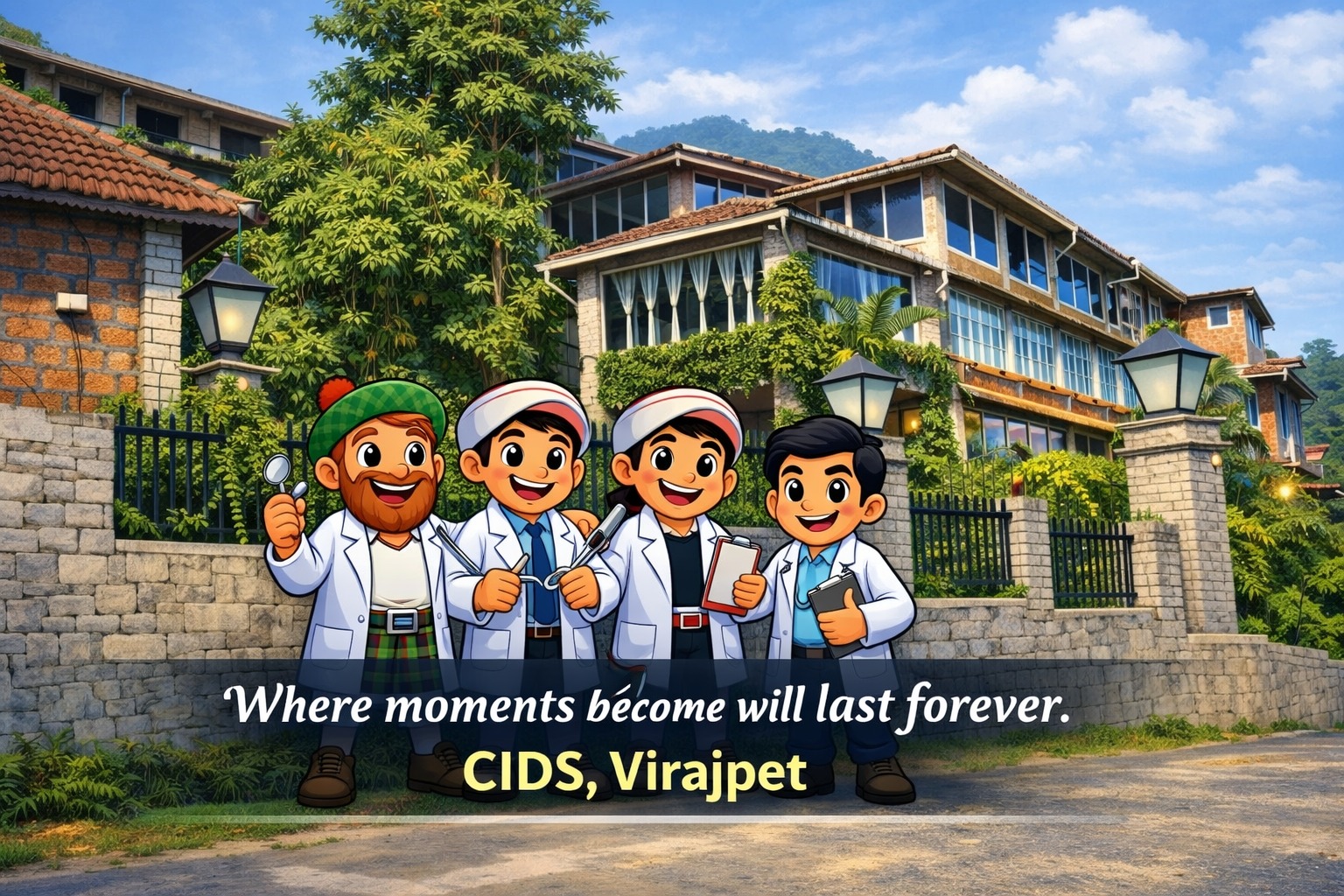
Dr. Sunil Muddaiah was born on 13th May 1965 to Shri K. K. Aiyappa and Mrs. Rani Aiyappa at St. Philomena's Hospital, Bangalore. The first of three children, he spent his earliest years at the School Estate, Siddapur in Coorg district — until the passing of his grandfather in 1970 brought a change in family circumstances.
At the age of five, he was sent to St. Mary's Home School, Kotagiri in the Nilgiris — the first of many chapters that would unfold far from home, amongst the hills he would come to love.
Here it is worth noting that as a young child, Dr. Sunil Muddaiah had dreamt of starting some project on the very hill site he later chose for the Dental Institute — a dream seeded long before he had the words to describe it.
Lawrence School, Lovedale — Athletics, Drama & Discipline
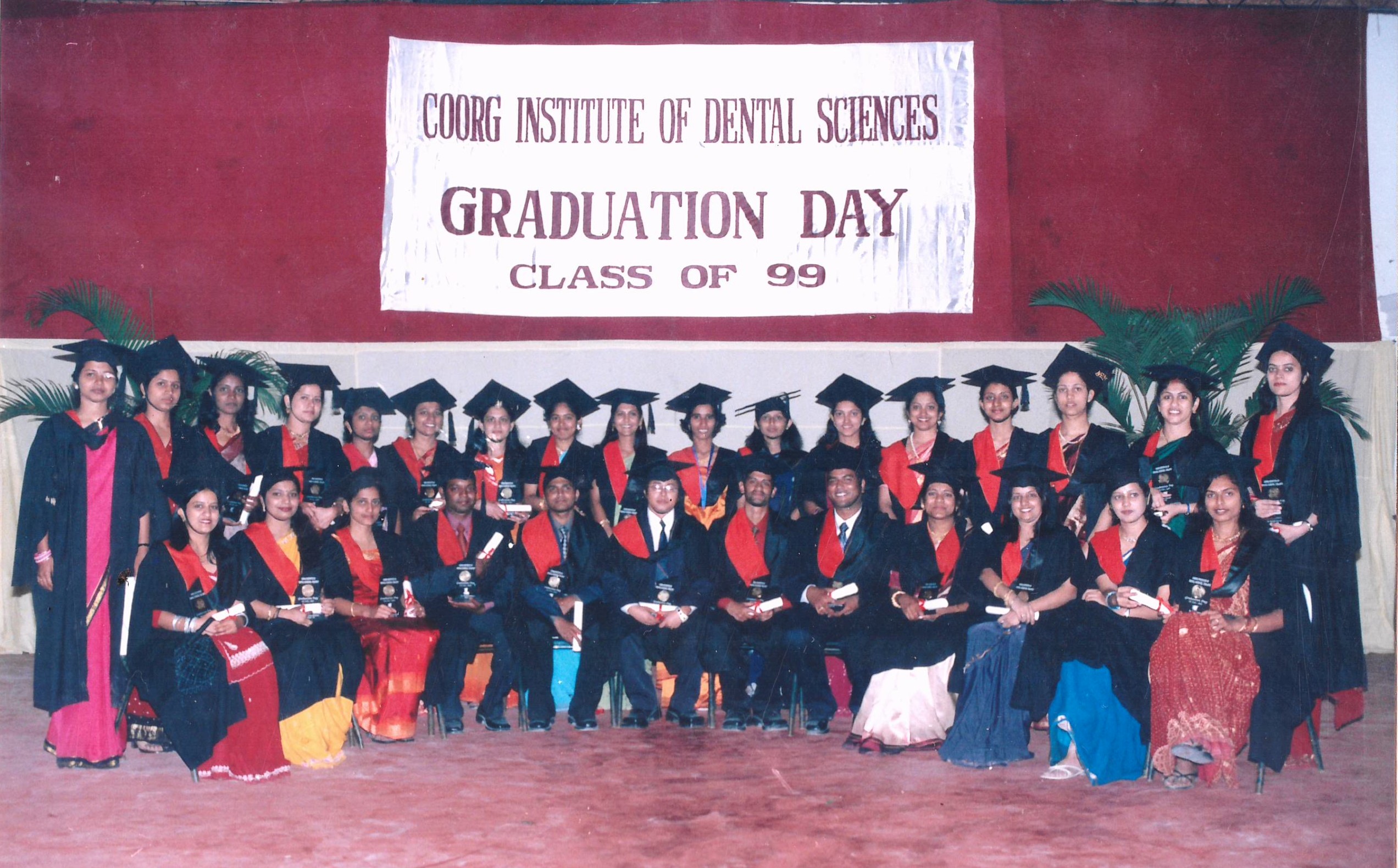
In 1974, at age nine, he was transferred to the prestigious Lawrence School, Lovedale in the Nilgiris — one of India's finest residential schools. He stayed through 1980, completing Standard 10 under the Central syllabus.
Those six years shaped the man he would become. He excelled in athletics — 100m, 200m sprints and field jumps — represented school in football and hockey, and found a love for dramatics and the stage. Yet through it all, he missed home and his parents deeply.
"He excelled in athletics, short runs 100 meters, 200 meters and jumps. He enjoyed his football and hockey and represented school in these events."
— From the chronicles of Dr. Sunil MuddaiahAfter his 10th standard, keen to stay at Lawrence School, his parents instead moved him to Ramakrishna Vidyasala, Mysore — a completely different, intensely Indian setup — and into the Science PCMB stream rather than his preferred Commerce and Economics.
The Road to Dentistry — Mangalore University, 1986–1993
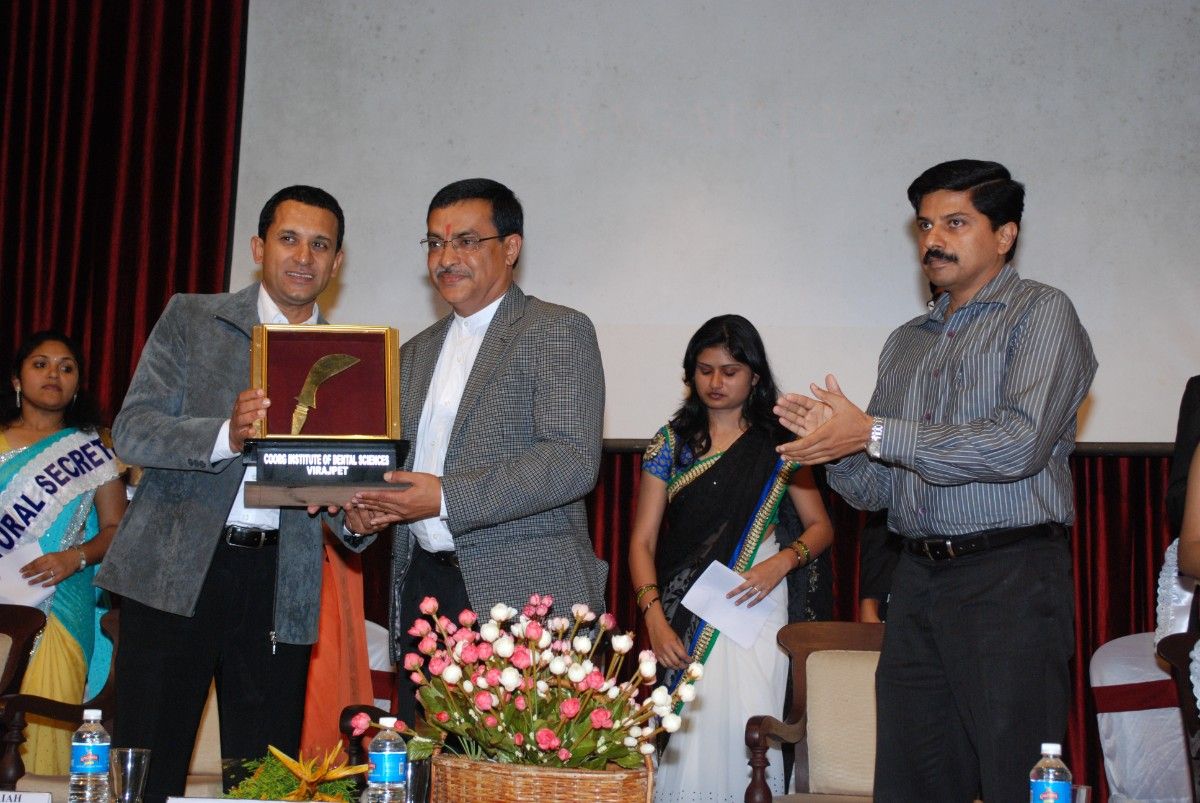
After 12th standard, his love for biology led him first to Agriculture College, then Veterinary — driven by a passion for animals. But in 1986, at his parents' direction, he joined the Bachelor of Dental Surgery programme at Mangalore University.
He completed his BDS in 1991, then immediately pursued his Masters in Orthodontics and Dentofacial Orthopaedics (1991–1993). In 1992, mid-Masters, he married Urvashi — both continued postgraduate studies side by side at Mangalore, she in English Literature, he in Orthodontics.
In September 1993, the couple returned to Coorg and settled at School Estate, Siddapur — the beginning of the chapter that would change Kodagu forever.
Coorg Dental Polyclinic — A Lone Practitioner
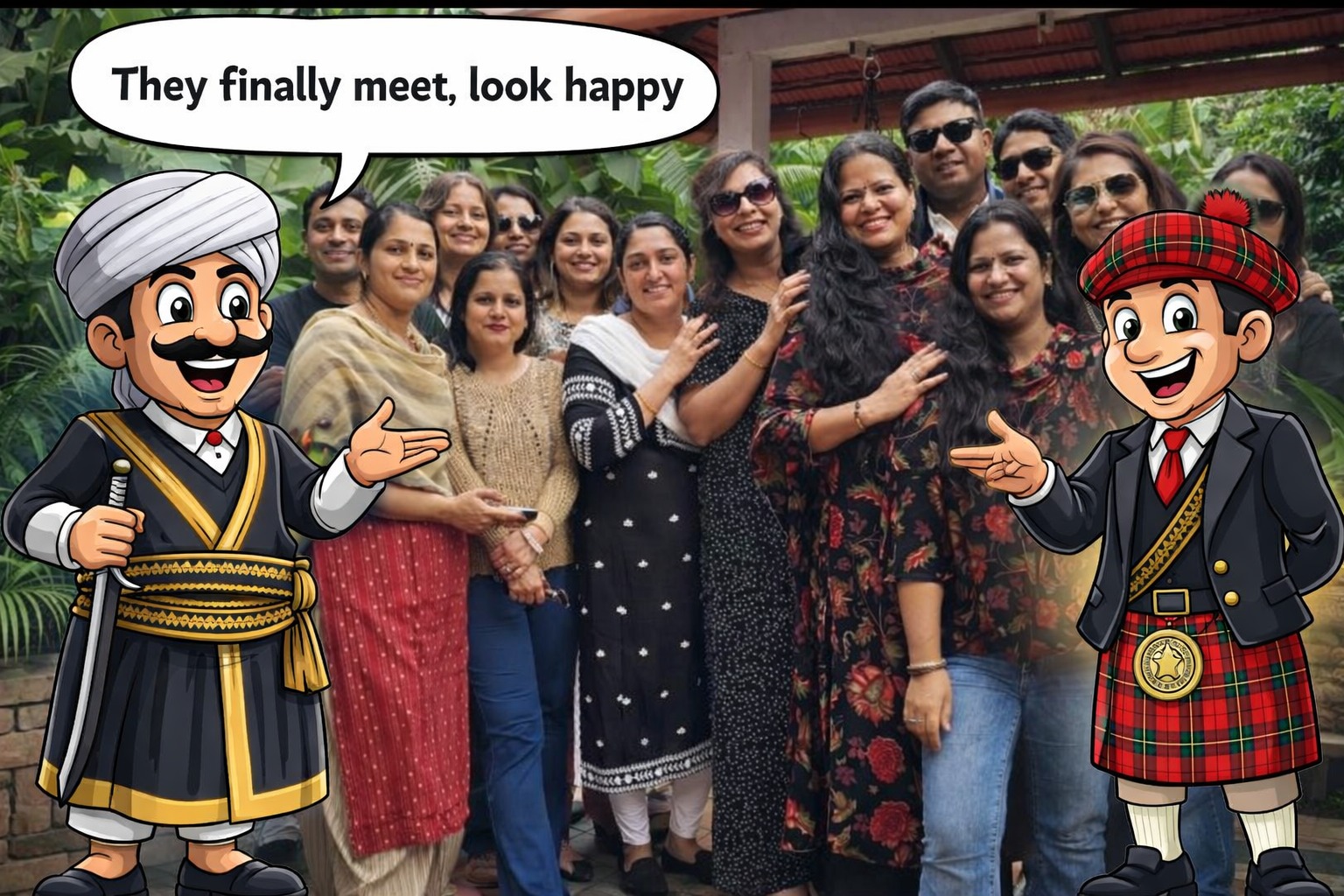
Back in Virajpet, Dr. Sunil Muddaiah started Coorg Dental Polyclinic — a modern facility unprecedented in Coorg district. Demand was immediate and intense: he was seeing 35 to 40 patients every single day, handling everything from orthodontics to extractions, alone.
Unable to find a second dentist to assist, he managed by bringing visiting specialists from Mangalore and Bangalore. The clinic became a great success. In 1995, the family moved from School Estate to Springdale Estate.
The Decision — 1996: "Something Much Bigger"
In 1996, something shifted. Busy as the practice was, Dr. Sunil Muddaiah felt compelled toward a larger purpose — a dental teaching institution that could serve every stratum of society and bring higher education to an underdeveloped Virajpet Taluk.
"In 1996, he took a decision that he must start something much bigger as a 'social initiative'. Thus was born the idea of starting a dental institution — a teaching institution which could treat all stratas of society who could not access private care in dentistry."
The reaction from family was shock. Against all doubt, he convinced his father, who then asked for wider family endorsement. With financial support secured, the Coorg Dental and Medical Sciences Trust was founded in 1996 — with Dr. P. C. Bopaiah as Chairperson and Mr. K. K. Aiyappa among the founding trustees.
Building on the Maggula Hills — Permissions, Pipelines & Perseverance
Applications moved from the Government of Karnataka to Rajiv Gandhi University, then to the Union Ministry of Health in New Delhi, and finally to the Dental Council of India. Dr. Sunil Muddaiah had to travel from Virajpet to Bangalore by taxi, catch the early morning flight to Delhi — sometimes returning the same day.
Six acres of land at the Maggula Hills were purchased. Construction began — but large trucks couldn't reach the campus, so all material came in small loads. There was no water on site; they laid over 1.5 km of underground pipeline through multiple filtration stages. By June 1998, 16,000 sq. ft. was ready.
"In 24 to 36 hours he used to travel from Virajpet, reach Delhi, complete his work with government and the Dental Council of India and return back to Coorg to fulfill his other work obligations."
After two difficult DCI inspections, permission finally arrived. September 1999.
September 20, 1999 — The First Day
On September 19th, 1999, the administrative office shifted from the town clinic at Virajpet to the newly built campus at Maggula. The next day — September 20th — CIDS officially opened with 40 students admitted through the CET cell in Bangalore.
The inauguration was presided over by Shri M. C. Nanaiah — who had been an indispensable pillar of support — alongside Dr. Chandrashekhar, Vice-Chancellor of Rajiv Gandhi University.
By 2004, 1 lakh sq. ft. of infrastructure. By 2006, 2 lakh. By 2009, the final expansion to 2.5 lakh sq. ft. Today, CIDS stands proud — a premier institute, born from a dream on the Maggula Hills.